
Precision control components for every climate-critical application.
Zone control thermostats, VAV box controllers, and BMS integration modules for office towers, retail spaces, and hospitality facilities requiring precise multi-zone climate management.
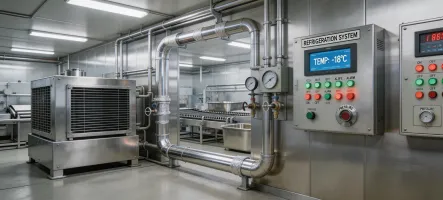
Sanitary-grade solenoid valves, high-accuracy temperature sensors (±0.1°C), and electronic expansion valves for process cooling, blast freezing, and cold storage applications meeting HACCP requirements.

High-precision pressure transducers, chilled water system valves, and BACnet-compatible controllers for CRAC/CRAH units maintaining ±0.5°C setpoint accuracy in mission-critical environments.
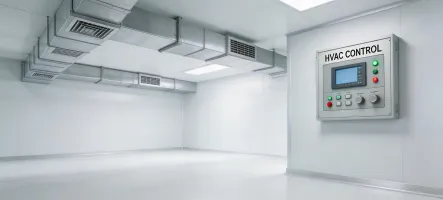
Calibrated temperature and humidity sensors, motorized control valves, and validated BMS interfaces for GMP-compliant cleanrooms, cold chain storage, and stability chambers.
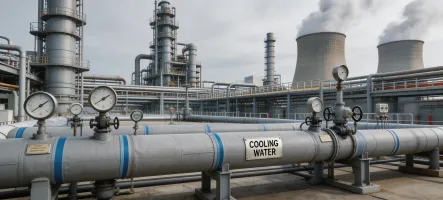
High-pressure solenoid valves (up to 45 bar), industrial-grade pressure transducers, and rugged temperature probes for chemical plants, plastics manufacturing, and metalworking cooling loops.
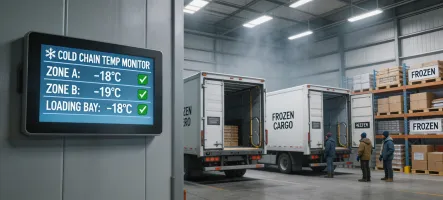
Transport refrigeration controllers, defrost timers, and remote temperature monitoring sensors for cold chain warehouses, distribution centers, and refrigerated transport fleets.
Selecting HVAC control components involves engineering trade-offs that depend on system architecture, refrigerant choice, and load profile. Two of the most debated decisions in the industry today:
The Kigali Amendment and EU F-Gas Regulation (revised 2024) are accelerating the global shift away from high-GWP HFCs. Control component selection is directly affected because valve sizing, pressure ratings, and material compatibility differ significantly between refrigerant families.
Zero or near-zero GWP with proven long-term sustainability and no patent dependencies. CO2 transcritical systems require expansion valves rated for high-side pressures up to 120 bar, while propane (R-290) demands flameproof solenoid coils due to A3 flammability classification. Operating costs tend to be lower at scale, but upfront system engineering is more complex.
Drop-in compatibility with existing infrastructure means standard pressure ratings (25-30 bar) and conventional valve materials remain suitable. Lower upfront retrofit costs and no flammability/toxicity design constraints. However, HFO refrigerants carry patent licensing costs and face ongoing environmental scrutiny regarding trifluoroacetic acid (TFA) decomposition byproducts.
Omron supplies valve and sensor product lines compatible with both pathways. Our EEV-500 series is rated for R-290 and R-744 high-side applications; our SV-300 series covers conventional HFO pressures.
The choice between inverter-driven and fixed-speed compressor systems has direct implications for control component specification, particularly expansion valve type and sensor resolution.
Deliver 30-50% energy savings at part load through capacity modulation. Require electronic expansion valves (EEVs) with fast response times (<2 seconds full stroke) and high-resolution temperature sensors (±0.1°C) to maintain stable superheat control across a wide operating range. Essential for variable-load applications such as data centers and commercial buildings.
Lower capital cost with simpler control logic. Thermostatic expansion valves (TXVs) provide reliable superheat regulation at constant load without requiring electronic controllers or stepper motor drivers. Proven reliability in constant-load applications such as industrial process cooling and ice production, where load variation is minimal.
Both approaches are valid engineering choices. System load profile, energy cost structure, and maintenance capability should drive the decision rather than technology preference alone.